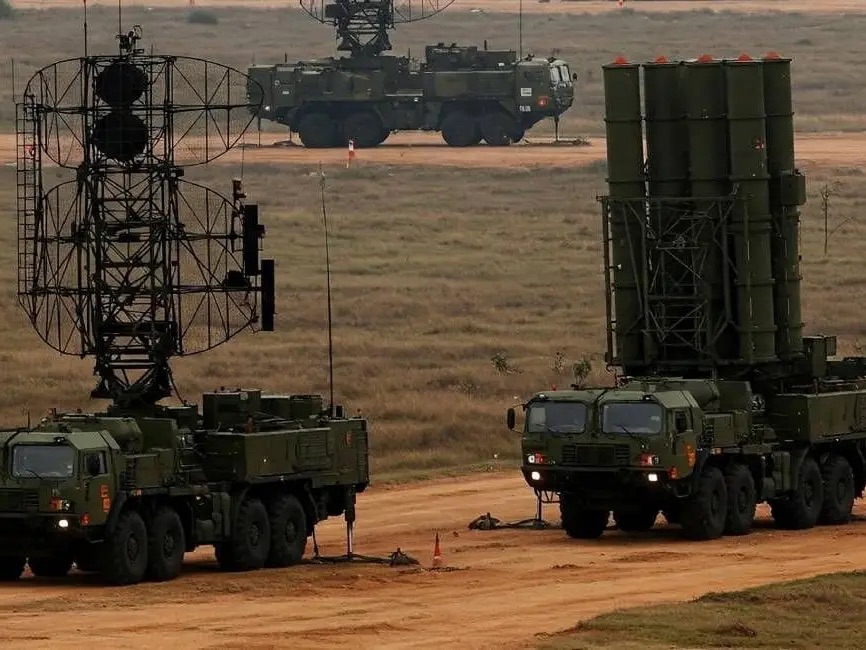
India’s acquisition of the S-400 Triumf air defense system from Russia marked a significant leap in its aerial defense capabilities. While there is no official confirmation or credible report that India has used the S-400 system against Pakistan in a conflict scenario, its deployment has nonetheless reshaped the strategic balance in South Asia.
Overview of the S-400 System
The S-400 Triumf is one of the world’s most advanced long-range surface-to-air missile systems. Developed by Russia’s Almaz Central Design Bureau, the S-400 can track up to 80 targets simultaneously and engage aircraft, drones, cruise missiles, and ballistic missiles within a range of up to 400 kilometers. It uses a layered defense approach, employing different types of missiles for short, medium, and long-range threats.
India’s Deployment of the S-400
India signed a $5.43 billion deal with Russia in 2018 to procure five S-400 regiments, with deliveries starting in 2021. The Indian Air Force (IAF) has strategically deployed these systems in sensitive zones, particularly along the western border with Pakistan and the northern border with China.
The first units were reportedly stationed in the Punjab sector, placing Pakistani cities and military bases within range of Indian radar and missile coverage.
Strategic Impact on Pakistan
1. Deterrence Against Air Intrusion:
Pakistan’s ability to carry out airstrikes or airspace violations has been significantly reduced due to the presence of the S-400 system. Its long detection and engagement range makes it nearly impossible for fighter jets or UAVs to cross into Indian airspace undetected.
2. Limits on PAF Tactics:
The Pakistan Air Force (PAF) traditionally relied on low-flying attack missions to avoid radar detection. However, the S-400’s powerful radar suite can detect low-flying targets over long distances. This limits PAF’s tactical flexibility, forcing it to reconsider its options in both offensive and defensive roles.
3. Neutralizing Stand-off Weapon Systems:
Even if Pakistan chooses to use long-range stand-off weapons such as cruise missiles, the S-400’s multi-tiered missile system can intercept them before they reach their targets. This makes Pakistani missile threats less effective unless launched in massive salvos.
4. Impact on Nuclear Doctrine:
While both nations maintain a nuclear arsenal under a no-first-use or minimum deterrence posture, the deployment of the S-400 introduces new complexities. It could, in theory, intercept slower-moving delivery systems, complicating Pakistan’s second-strike credibility.
Notable Tensions and Skirmishes
There has been no confirmed combat use of the S-400 by India against Pakistan. However, the 2019 Balakot airstrike and subsequent dogfight raised awareness in India about the need for robust air defense systems. If such a situation arises again, the S-400 could serve as a key deterrent and defense platform, potentially neutralizing any aerial retaliation.
Conclusion
While no direct engagement has occurred between India’s S-400 systems and Pakistani aircraft or missiles, the mere presence of such an advanced air defense platform has altered the military calculus in the region. For Pakistan, the S-400 represents a significant challenge, one that may limit its strategic options and push it toward developing countermeasures or reconsidering its approach to aerial warfare.
India’s integration of the S-400 into its defense network has therefore served not only as a military upgrade but also as a powerful deterrent against future escalation from across the border.
 The Defense Front: Understanding the World of Defense
Leave a comment