Introduction to the JF-17 Thunder
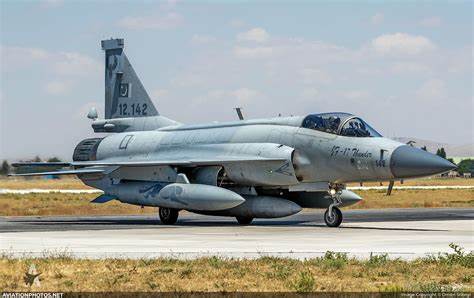
The JF-17 Thunder, designated as FC-1 Xiaolong in China, is a testament to Sino-Pakistani collaboration. Developed jointly by the Pakistan Aeronautical Complex (PAC) and Chengdu Aircraft Corporation (CAC), this lightweight, single-engine multi-role fighter was conceived to replace Pakistan’s aging fleet of MiG-21s, Mirages, and F-7s. Prioritizing affordability without compromising versatility, the JF-17 has become the backbone of the Pakistan Air Force (PAF) and a competitive player in the global defense market.
Development and Evolution
- Origins: Launched in the late 1990s, the JF-17 project aimed to create a cost-effective solution for air superiority and ground attack roles. Key motivations included reducing reliance on expensive Western jets and addressing fleet obsolescence.
- Milestones:
- 2003: Maiden flight of the prototype.
- 2007: Operational deployment with PAF.
- 2013–2020: Introduction of Block II (2013) and Block III (2020) variants.
- Challenges: Early hurdles included engine selection; the Russian Klimov RD-93 was chosen initially, though later variants plan to integrate China’s WS-13 for enhanced thrust and reliability.
Design and Technical Specifications
The JF-17 blends delta-wing aerodynamics with modern systems:
- Engine:
- Block I/II: Klimov RD-93 (19,000 lbf thrust).
- Block III: Planned WS-13 (21,000 lbf) for improved performance.
- Performance:
- Speed: Mach 1.6 (1,350 mph).
- Range: 1,200 km combat radius (with external fuel tanks).
- Service Ceiling: 55,500 ft.
- Avionics:
- Block III: KLJ-7A AESA radar, enhanced situational awareness, and ASELPOD targeting pod.
- Cockpit: Glass cockpit with 3-axis digital fly-by-wire, holographic HMD, and intuitive HOTAS controls.
- Armament:
- Air-to-Air: PL-5EII, PL-15 (Block III), and AIM-9L/M (export).
- Air-to-Ground/Surface: CM-400AKG anti-ship missiles, laser-guided bombs, and RAAD cruise missiles.
- Gun: 23mm GSh-23-2 twin-barrel cannon.
Key Variants
- Block I: Baseline model with basic avionics; 50+ units delivered to PAF.
- Block II: Enhanced with in-flight refueling, dual-seat option (JF-17B), and improved radar.
- Block III: Top-tier variant featuring KLJ-7A AESA radar, reduced radar cross-section (via coatings), and compatibility with PL-15 missiles. Production began in 2021.
Combat Performance and Operational Use
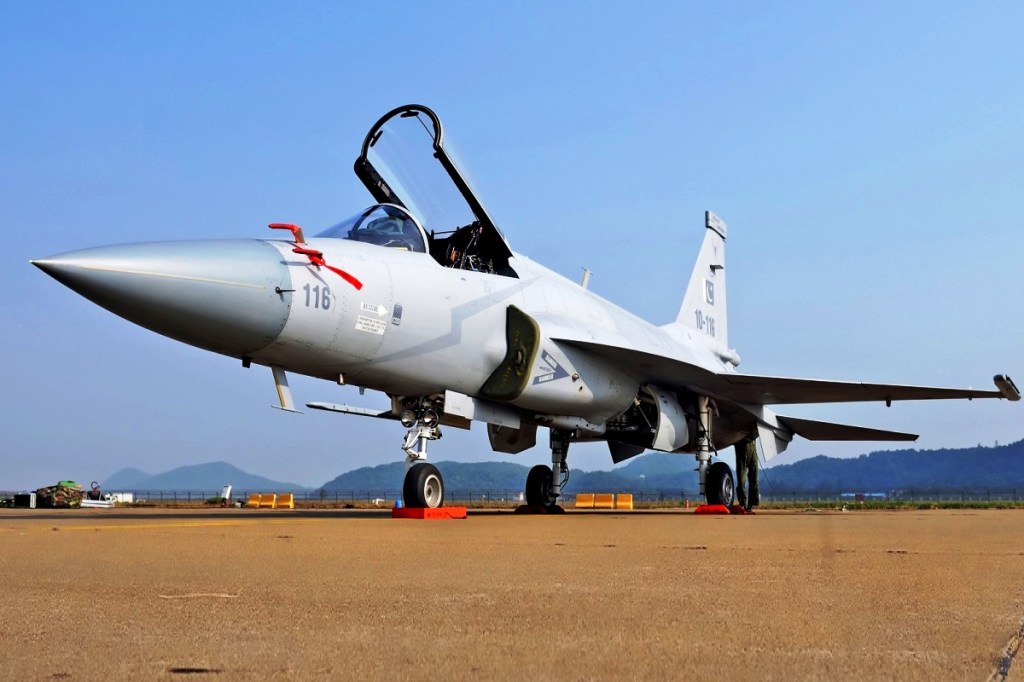
- PAF Deployment: JF-17s conduct air defense, strike missions, and reconnaissance. Notably, PAF credits the jet with roles in the 2019 Balakot operation, though debates about its use persist externally.
- Exercises: Demonstrated agility in joint drills with Turkey (Anatolian Eagle) and China (Shaheen).
- Export Operations: Nigerian JF-17s have engaged in counterinsurgency operations in the Sahel.
Global Interest and Export Challenges
- Customers: Nigeria (3 delivered), Myanmar (16), and Azerbaijan (in talks). Argentina showed interest but faced UK veto over RD-93 components.
- Competition: Priced at ~$25–35 million, it rivals India’s Tejas, Sweden’s Gripen, and used F-16s.
- Hurdles: Dependency on Chinese subsystems and geopolitical pressures (e.g., UK’s veto for Argentina).
Future Prospects
- Block IV: Potential upgrades include AI-assisted systems, loyal wingman drones, and improved stealth via shape optimization.
- Technological Leap: Integration of hypersonic weapons and advanced EW suites is under exploration.
- Production: Over 150 units built, with PAC aiming to localize 85% of manufacturing.
Conclusion
The JF-17 Thunder exemplifies cost-effective innovation, offering modern combat capabilities at a fraction of the cost of Western jets. With continuous upgrades and growing international interest, it is poised to remain pivotal for the PAF and emerging air forces. As global defense budgets tighten, the JF-17’s balance of affordability and performance ensures its relevance in 21st-century aerial warfare.
 The Defense Front: Understanding the World of Defense
Leave a comment