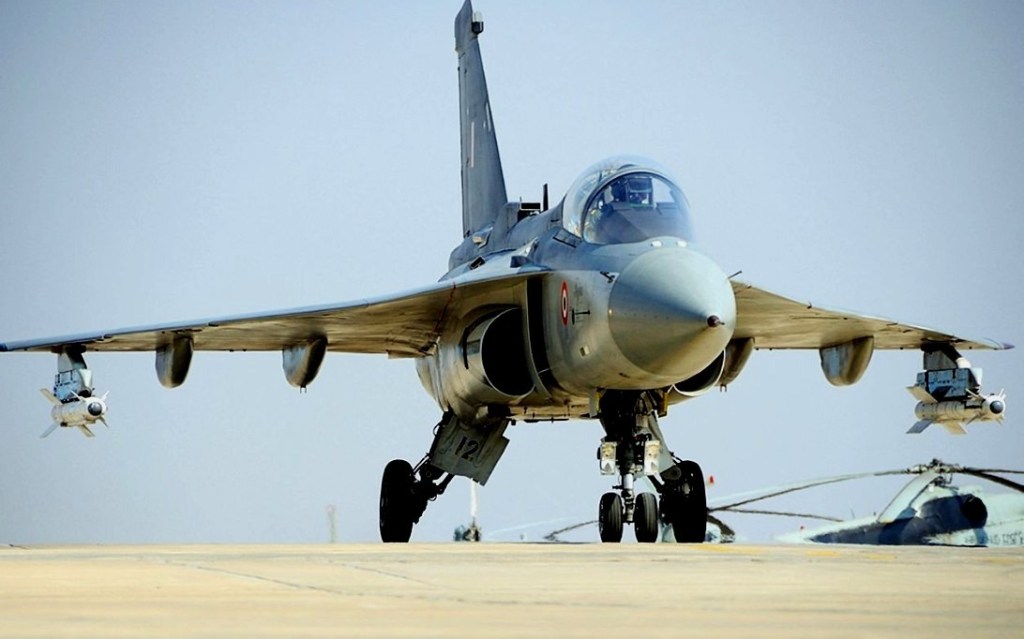
The HAL Tejas, an advanced multi-role light combat aircraft developed by Hindustan Aeronautics Limited (HAL), is a flagship example of India’s progress in indigenously designed and built defense technology. The aircraft is designed to cater to the needs of modern air forces, combining cutting-edge technologies with high-performance capabilities. This article explores the HAL Tejas, its variants, development process, and how it positions India in the global aerospace and defense market.
What is HAL Tejas?
The HAL Tejas is a single-engine, fourth-generation light combat aircraft (LCA) designed for the Indian Air Force (IAF) and Indian Navy. It is the culmination of decades of research, design, and development under India’s ambitious LCA program. The Tejas was designed to replace the aging fleet of MiG-21s, which were serving as the backbone of the IAF for several decades.
Tejas is a versatile aircraft capable of a variety of roles, including air-to-air combat, air-to-ground strikes, and reconnaissance. It incorporates state-of-the-art avionics, advanced flight control systems, and composite materials, making it highly maneuverable, durable, and efficient.
Development History
The Tejas project began in the 1980s when the Indian Ministry of Defence decided to replace its aging fleet of combat aircraft with a more modern and indigenous fighter. HAL was tasked with the design and development of the aircraft, with the project initially named the “Light Combat Aircraft” (LCA). Over the years, various challenges, including delays in technology development, cost overruns, and the need for rigorous testing, slowed down its progress.
However, despite these challenges, Tejas made its maiden flight on January 4, 2001, marking a significant milestone. By 2013, the Tejas program reached the Final Operational Clearance (FOC) stage, confirming the aircraft’s readiness for induction into the Indian Air Force.
Key Features of HAL Tejas
- Design & Structure: The aircraft is made of lightweight composite materials, contributing to its agility and fuel efficiency. Its delta-wing configuration ensures better maneuverability in dogfights and higher-speed performance.
- Avionics: The Tejas features an advanced digital fly-by-wire system, integrated avionics suite, and radar, providing superior situational awareness and combat effectiveness.
- Engine: Powered by the General Electric F404-GE-IN20 engine, the Tejas is capable of reaching speeds of up to 1,350 km/h (Mach 1.1) and has a combat range of 500 km with drop tanks.
- Weapons: The Tejas can carry a variety of weapons, including air-to-air missiles, air-to-ground missiles, and precision-guided bombs. It also features an internal cannon for close combat.
- Stealth Features: While not fully stealth, the aircraft’s design includes features that reduce its radar cross-section, improving survivability in contested airspace.
Variants of HAL Tejas
Since its inception, several variants of the HAL Tejas have been developed to meet different operational requirements of the Indian Air Force, Navy, and potential export clients. Here are the main variants:
1. Tejas Mark 1 (LCA Tejas Mk1)
The Tejas Mark 1 is the first operational variant of the aircraft, primarily designed to meet the Indian Air Force’s requirements. It was developed under the FOC (Final Operational Clearance) and is already in service.
- Role: Multi-role light fighter
- Specifications: Length – 13.2 meters, Wingspan – 8.2 meters, Maximum Takeoff Weight (MTOW) – 13,500 kg
- Armament: Air-to-air and air-to-ground missiles, guided bombs
- Avionics: ELTA 2032 Radar, D-30 Digital Flight Control System
2. Tejas Mark 1A
The Tejas Mark 1A is an upgraded version of the Tejas Mk1, featuring significant improvements in avionics, radar systems, and weapons capabilities. It also includes better maintainability features, reduced life cycle costs, and enhanced performance.
- Upgrades: The addition of an AESA (Active Electronically Scanned Array) Radar, electronic warfare systems, and new generation weapon control systems.
- Role: Enhanced multi-role fighter
- Service: Expected to be inducted into the Indian Air Force starting from 2025.
3. Tejas Mark 2 (LCA Tejas Mk2)
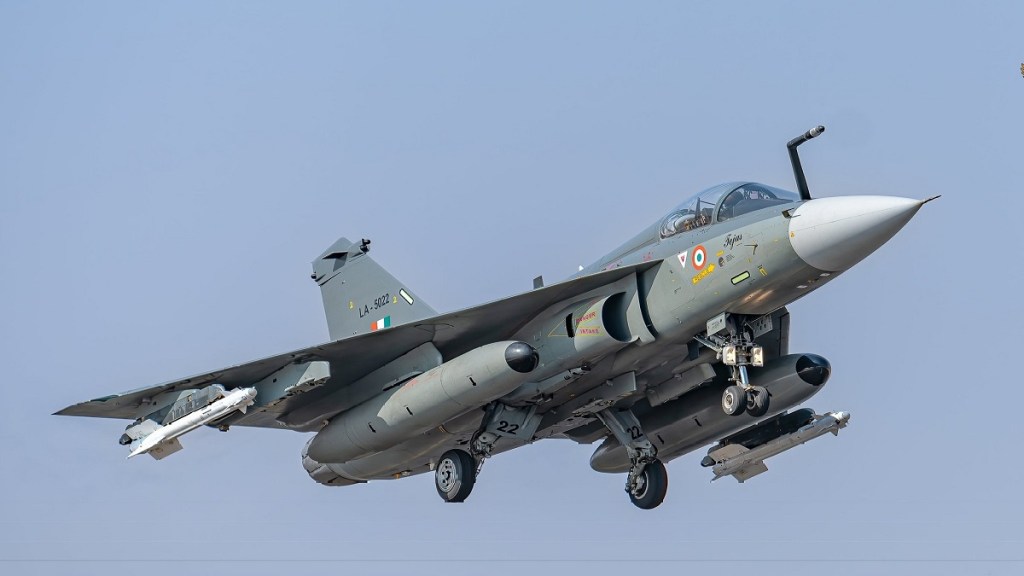
The Tejas Mark 2 is a more advanced variant under development to bridge the gap between light and medium fighter aircraft in the IAF. It is designed to feature enhanced performance, greater payload capacity, and superior combat effectiveness.
- Key Features: Larger airframe, more powerful GE F414 engine, enhanced avionics, improved weapons integration.
- Role: Multirole, strike fighter aircraft
- Specifications: MTOW – 17,500 kg, Range – 2,000 km
- Development Status: Expected to enter service around 2027.
4. Tejas Naval (LCA Navy)
The Tejas Naval variant was designed for operation from Indian Navy aircraft carriers. It features strengthened landing gear, tailhook for carrier landings, and is optimized for naval operations.
- Role: Carrier-based multirole fighter
- Key Features: Tailhook system for carrier-based landings, strengthened airframe, and enhanced radar capabilities
- Status: The Tejas Naval is in its Mk1A and Mk2 development stages, with the Indian Navy planning to induct it into service in the near future.
5. Tejas Export Variant
Tejas’ potential export variant has been tailored to meet the needs of other air forces across the globe, especially in developing countries looking for affordable but capable multi-role fighters.
- Target Markets: Countries in Asia, Africa, and the Middle East, with several nations already expressing interest.
- Export Success: While the Tejas is still looking for international clients, the aircraft has participated in numerous airshows and has been part of discussions with countries like Malaysia and Egypt.
Tejas in the Indian Armed Forces
The Tejas has already seen successful induction into the Indian Air Force and Indian Navy, with the IAF operating the aircraft under the 45 Squadron. The aircraft is expected to play a crucial role in strengthening India’s defense capabilities, particularly in the face of evolving geopolitical tensions in the region.
Additionally, with the Tejas Mk2 and Tejas Naval variants expected in the coming years, the aircraft will become a core part of both the IAF and Navy’s future strategies.
Future Prospects of HAL Tejas
As India continues to strengthen its aerospace and defense sectors, the future of HAL Tejas looks promising. With its increasing operational capabilities and the arrival of the more advanced variants, the Tejas is poised to serve as a major player in the country’s defense strategy. Furthermore, its potential export success could position India as a key global player in the defense market.
Conclusion
The HAL Tejas represents India’s strides in self-reliance in defense technology. From its humble beginnings as a dream project to its current operational status, the aircraft has become a symbol of India’s growing technological expertise in aviation. With continued upgrades and variants like the Tejas Mark 1A, Tejas Mark 2, and Tejas Naval, India is well on its way to cementing its place among the leading aerospace nations globally.
For defense enthusiasts, military analysts, and those interested in India’s aerospace progress, the Tejas program is a testament to the nation’s ambitious goals for self-sufficiency, innovation, and excellence in air combat systems.
 The Defense Front: Understanding the World of Defense
Leave a comment