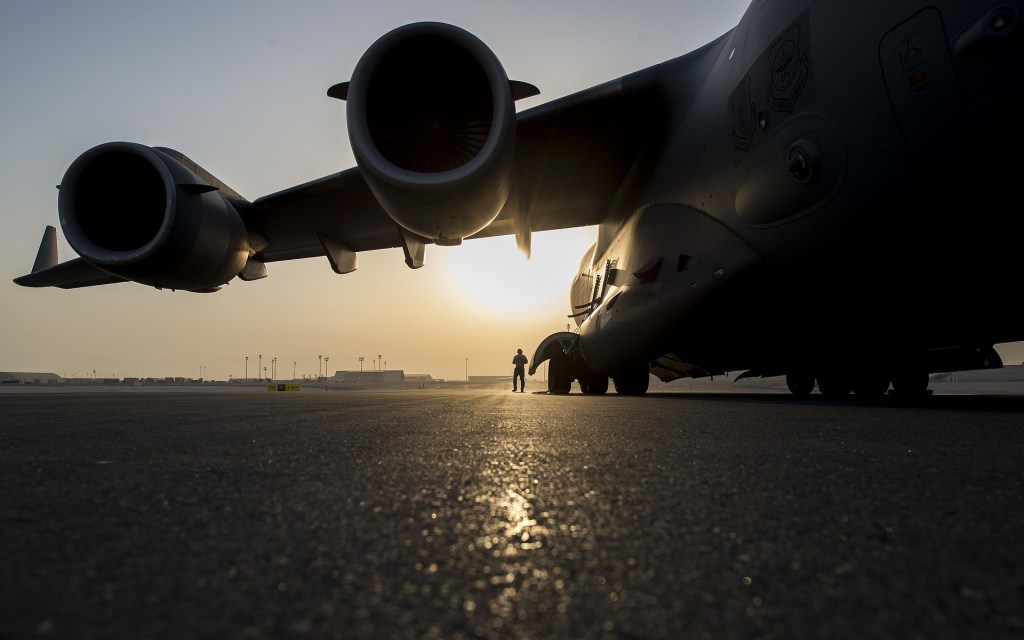
The Boeing C-17 Globemaster III is a titan of military logistics, blending unmatched versatility with cutting-edge technology. This comprehensive guide explores its history, engineering marvels, global impact, and future, optimized for SEO keywords like “C-17 payload capacity,” “Boeing Globemaster III cost per hour,” and “C-17 vs Airbus A400M.”
1. Development History: From Concept to Sky Dominance
Origins & Requirements:
- 1980 U.S. Air Force Need: Replace the C-141 Starlifter with an aircraft capable of strategic range and tactical agility.
- Contract Award: McDonnell Douglas (later acquired by Boeing) won the bid in 1981; the program faced delays due to budget cuts and design revisions.
- First Flight: September 15, 1991, with the first delivery to the 437th Airlift Wing in 1993.
Key Challenges:
- Engine Issues: Initial Pratt & Whitney PW2037 engines were replaced with F117-PW-100 for better thrust and reliability.
- Cost Overruns: Development costs soared to $3.4 billion, prompting Congressional scrutiny.
2. Technical Specifications: Engineering Mastery
Airframe & Design:
- Wingspan: 169.8 ft (51.75 m) with a supercritical wing design for fuel efficiency.
- Cargo Hold: 88 ft long x 18 ft wide x 12.4 ft high, accommodating M1 Abrams tanks, helicopters, or 18 pallets.
Performance Metrics:
- Max Takeoff Weight: 585,000 lbs (265,352 kg).
- Range: 2,400 nautical miles (4,444 km) with max payload; global reach with aerial refueling.
- Engines: Four Pratt & Whitney F117-PW-100 turbofans (40,440 lbf each), enabling steep climbs to 28,000 ft in minutes.
Avionics & Systems:
- Advanced Flight Deck: Rockwell Collins Common Avionics Architecture System (CAAS) with night-vision-compatible HUDs.
- Defensive Systems: AN/AAR-47 missile warning and AN/ALE-47 countermeasures.
3. Operational Roles: Versatility Unleashed
Military Missions:
- Rapid Deployment: Deployed 70% of U.S. equipment during Operation Iraqi Freedom.
- Airdrop Precision: Delivered 60-ton Stryker vehicles via Low-Cost, Low-Altitude (LCLA) drops.
Humanitarian Operations:
- 2010 Haiti Earthquake: Delivered 4.7 million lbs of aid in 120+ missions.
- COVID-19 Response: Transported vaccines globally under Operation Warp Speed.
Medical Evacuation (MEDEVAC):
- Configurable for 36 critical-care patients, with onboard oxygen and ICU equipment.
4. Global Operators: Strategic Partnerships
United States:
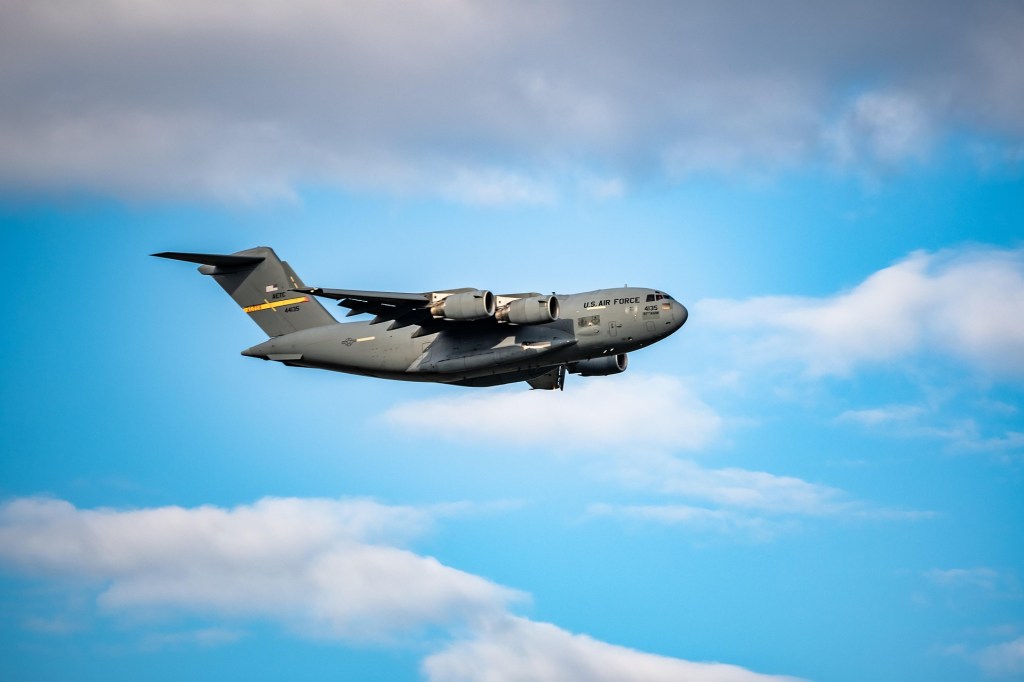
- Fleet Size: 222 aircraft across Active Duty, Guard, and Reserve units.
- Key Bases: Charleston AFB, Travis AFB, and Joint Base Lewis-McChord.
International Operators:
- India: 11 C-17s (purchased for $4.1 billion in 2011) critical for Ladakh border logistics and disaster relief.
- UK: 8 aircraft used in Afghanistan evacuations (Op PITTING).
- Qatar: Largest non-U.S. operator (8 units), supporting Middle East operations.
Retirement Plans:
- U.S. Phase-Out: Slated for 2035, replaced by Next-Generation Air Mobility (NGAM) drones and hybrid transports.
5. C-17 vs Competitors: Market Analysis
C-17 vs C-5M Super Galaxy:
- Payload: C-5M carries 285,000 lbs vs C-17’s 170,900 lbs.
- Flexibility: C-17 operates from 3,500-ft runways; C-5M requires 8,300+ ft.
C-17 vs Airbus A400M Atlas:
- Cost: C-17 costs $218 million vs A400M’s $150 million.
- Range: A400M’s 2,450 nm vs C-17’s 2,400 nm, but C-17 has superior refueling endurance.
6. Challenges, Upgrades & Modernization
Operational Challenges:
- High Costs: $44,000/hour vs $30,000 for C-130J.
- Aging Fleet: Wing root cracks reported in early-model C-17s.
Modernization Programs:
- Block 21 Upgrades: Enhanced Link-16 datalinks, GPS upgrades, and cybersecurity hardening.
- Engine Upgrades: Pratt & Whitney’s Enhanced Engine Program (EEP) boosts fuel efficiency by 8%.
7. Future Prospects & Legacy
Next-Gen Innovations:
- Autonomous Cargo Drones: Boeing’s MQ-25 Stingray may complement future airlift.
- Hybrid-Electric Concepts: Potential successors like EC-130J with reduced carbon footprint.
Legacy:
- Global Impact: Over 3 million flight hours logged, with 90% mission success rate.
- Humanitarian Icon: Symbolized by the 2021 Kabul evacuation, rescuing 124,000 people.
Conclusion: The C-17’s Enduring Legacy
The Boeing C-17 Globemaster III redefined military logistics, merging brute strength with surgical precision. From war zones to disaster relief, its legacy as a global workhorse remains unmatched. As nations pivot to next-gen solutions, the C-17’s DNA will influence airlift strategy for decades.
 The Defense Front: Understanding the World of Defense
Leave a comment