Introduction
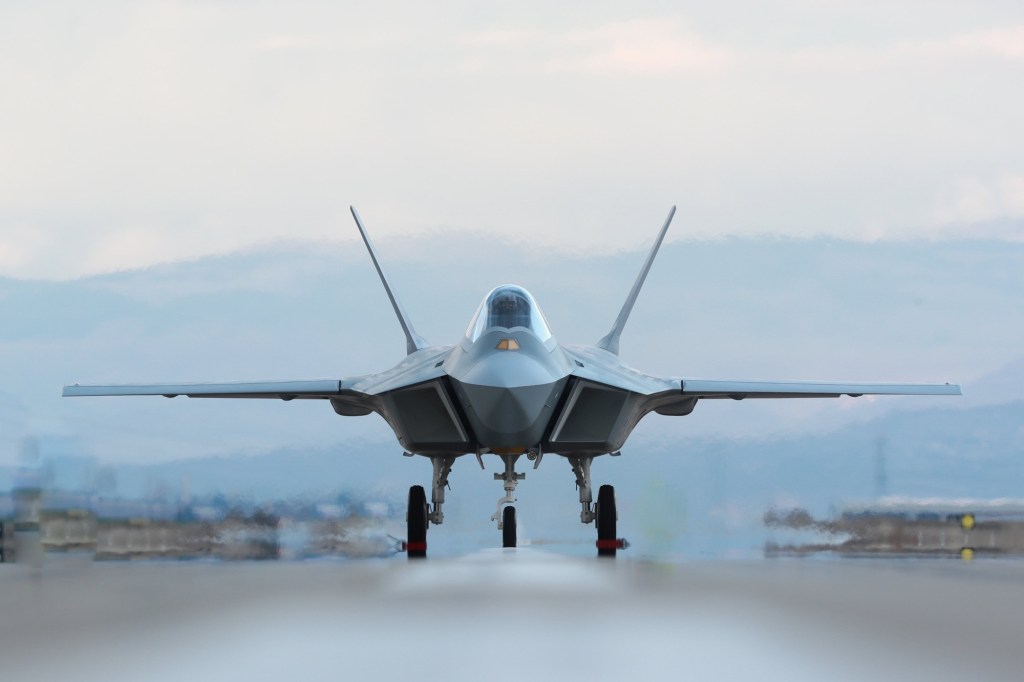
Turkey’s aerospace ambitions have soared to new heights with the TAI KAAN, a cutting-edge 5th-generation fighter jet poised to redefine the nation’s airpower. Developed indigenously by Turkish Aerospace Industries (TAI) under the TF-X program, KAAN symbolizes Turkey’s resolve to achieve military self-reliance after geopolitical setbacks, including its expulsion from the F-35 program. Blending stealth, supersonic agility, and next-gen avionics, KAAN aims to secure Turkey’s skies and carve a niche in the global defense market. This article dives into the jet’s development, technological breakthroughs, and strategic implications for Turkey and beyond.
Development of the KAAN Fighter Jet: From Concept to Reality
Origins of the TF-X Program
Turkey’s quest for a homegrown fighter began in the early 2010s but gained urgency in 2019 after the U.S. revoked its F-35 access over the contentious S-400 missile deal with Russia. With its aging F-16 fleet nearing obsolescence, Ankara doubled down on the TF-X program, tasking TAI with delivering a stealth-capable, multirole fighter to counter regional rivals and NATO-aligned competitors alike.
Key Milestones & Challenges
- 2016: TAI signs partnership with BAE Systems for design expertise.
- 2021: Full-scale mockup unveiled, revealing sleek, F-22-inspired aerodynamics.
- 2023: Prototype rolls out, featuring temporary General Electric F110 engines.
- 2024: Maiden flight on February 21 marks Turkey’s entry into the 5th-gen club.
- 2025-2030: Intensive flight tests and integration of indigenous subsystems, including the critical TRMotor TF6000 turbofan (under development).
Collaborative Ecosystem
TAI leads the project, with critical input from:
- ASELSAN: AESA radar and electronic warfare systems.
- HAVELSAN: AI-powered mission software and data fusion.
- Rolls-Royce/TRMotor: Co-developing engines to replace imported powerplants.
KAAN’s Cutting-Edge Design & Capabilities
Stealth: Balancing Form and Function
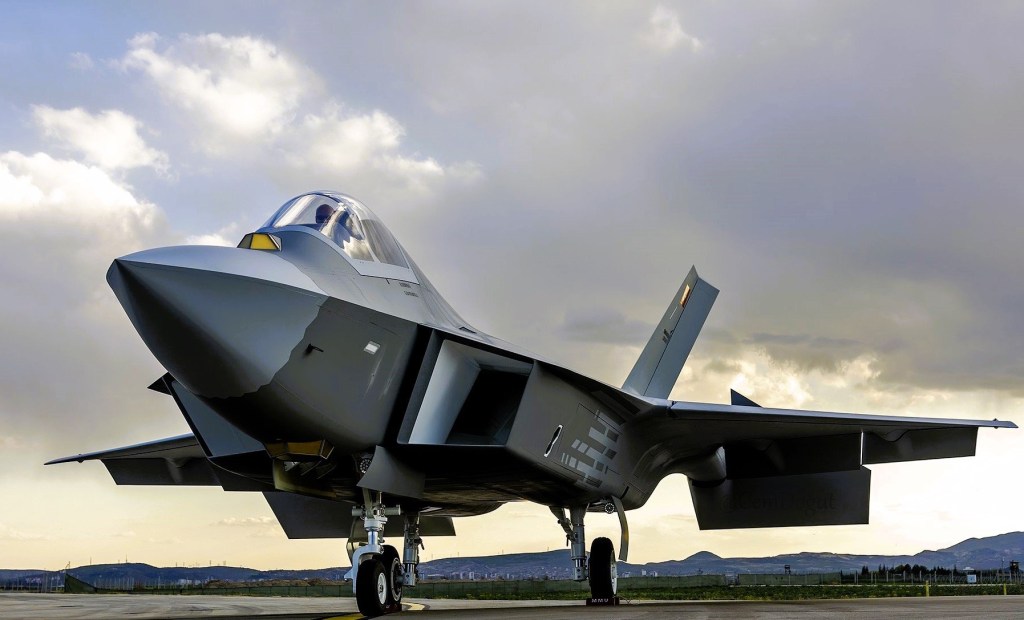
KAAN’s design prioritizes reduced radar cross-section (RCS) through:
- Angular, faceted surfaces to deflect radar waves.
- Internal weapons bays minimizing external payload drag.
- Radar-absorbent coatings tailored for diverse threat frequencies.
Performance: Speed, Range, and Agility
- Twin Engines: Twin TF6000 engines (targeting 28,000 lbf thrust each) enable Mach 1.8+ speeds and supercruise capability.
- Combat Range: 1,100+ nautical miles with internal fuel, extendable via conformal tanks.
- Thrust Vectoring (planned): Enhances dogfighting maneuverability, rivaling the Su-57.
Avionics: A Digital Battlespace Leader
- AESA Radar: Detects targets beyond 200 km, tracking 30+ simultaneously.
- Sensor Fusion: Combines EOTS, IRST, and EW data into a single cockpit interface.
- Loyal Wingman Integration: Designed to command drones like the KIZILELMA for swarm attacks.
Armament: Versatility Meets Lethality
- Internal Bay: Accommodates 6 air-to-air missiles (e.g., Gökdoğan) or precision bombs.
- External Hardpoints: For non-stealth missions, carrying SOM-J cruise missiles or KGK glide bombs.
- Future-Proofing: Modular architecture allows integration of directed-energy weapons and hypersonic missiles.
KAAN vs. Global 5th/6th-Generation Fighters: How It Stacks Up
FeatureTAI KAANF-35ASu-57J-20Tempest (UK)Stealth Moderate-High Very High Moderate High Very High (6th-gen) Supercruise Yes No Yes Yes Yes Top Speed Mach 1.8+ Mach 1.6 Mach 2+ Mach 2 Mach 2+ (est.) Engine TF6000 (future) F135-PW-100 Izdeliye 30 WS-15 (in testing) Tempest Engine AI/Drone Control Integrated Limited Limited Limited Core Feature Export Status Planned Restricted (ITAR) Limited Restricted Consortium-only
Competitive Edge: KAAN’s balance of cost ($100 million per unit est.), stealth, and multirole versatility positions it as an attractive option for nations barred from buying F-35s, such as Azerbaijan, Pakistan, and Indonesia.
Strategic Impact: Redefining Turkey’s Defense Landscape
- Ending Foreign Dependency
KAAN reduces Turkey’s reliance on U.S. F-16 upgrades and Russian tech, insulating it from geopolitical arms embargoes. - Export Ambitions
Turkey aims to capture 10% of the global fighter market by 2040, targeting Middle Eastern, Asian, and African buyers. KAAN could undercut rivals like the Rafale ($115M) and Su-35 ($85M) with competitive pricing and flexible financing. - Technological Spinoffs
Advances in AESA radars, engine tech, and AI-driven systems will bolster Turkey’s drone programs (e.g., Bayraktar TB3) and civilian aerospace projects. - NATO’s Dilemma
KAAN complicates Turkey’s NATO role, as allies may hesitate to integrate a non-Western stealth fighter into shared defense networks.
Challenges Ahead
- Engine Delays: TRMotor’s TF6000 is still in development; reliance on foreign engines risks timelines.
- Export Hurdles: Competition with entrenched players like Dassault and Lockheed Martin demands aggressive marketing.
- Tech Maturity: Perfecting sensor fusion and low-observable coatings requires sustained investment.
Conclusion: KAAN’s Ascent in the Global Arena
The TAI KAAN is more than a fighter—it’s a statement of Turkey’s engineering prowess and strategic autonomy. While hurdles remain, its successful maiden flight signals Ankara’s determination to join the elite club of nations with 5th-gen capabilities. By 2035, KAAN could dominate Eurasian skies, offering a cost-effective, battle-ready alternative in an increasingly multipolar world.
 The Defense Front: Understanding the World of Defense
Leave a comment