Introduction
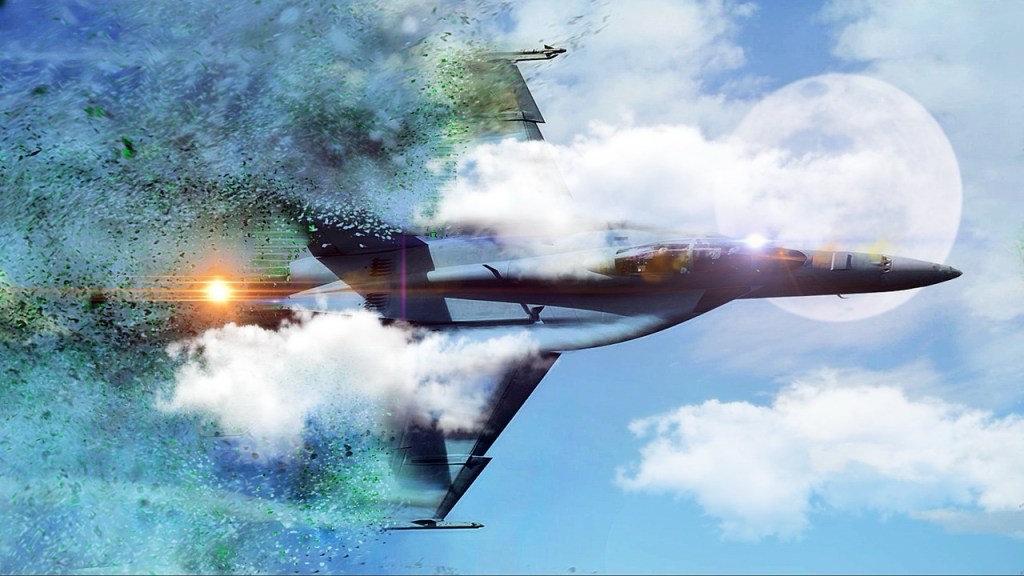
The F/A-18 Hornet and its advanced variant, the F/A-18E/F Super Hornet, are among the most successful multi-role fighter jets in modern military aviation. Designed for air superiority, ground attack, reconnaissance, and electronic warfare, the F/A-18 serves as the backbone of the U.S. Navy and Marine Corps, while also being operated by several allied nations.
Known for its carrier-based operations, high agility, advanced avionics, and combat versatility, the Hornet has proven its effectiveness in multiple conflicts, from the Gulf War to present-day missions. In this in-depth analysis, we will explore the F/A-18 Hornet’s capabilities, operational history, upgrades, and how it compares to modern fighter jets like the F-35 and Rafale.
Development and Design of the F/A-18 Hornet
Origins and Evolution
The F/A-18 program began in the 1970s when the U.S. Navy sought a replacement for the aging F-4 Phantom II and A-7 Corsair II. The result was the McDonnell Douglas (now Boeing) F/A-18 Hornet, which was officially introduced in 1983. It was designed to perform both fighter (F) and attack (A) missions, making it one of the first true multi-role combat aircraft (MRCA) in U.S. military service.
Key Design Features
• Twin-engine reliability for enhanced safety in carrier operations.
• Aerodynamic agility with high maneuverability and advanced flight controls.
• Fly-by-wire system for superior handling and responsiveness.
• Advanced avionics, including a digital cockpit and heads-up display (HUD).
• Carrier suitability, with reinforced landing gear and tailhook for arrested landings.
F/A-18E/F Super Hornet: A Next-Gen Upgrade
The F/A-18E/F Super Hornet, introduced in the late 1990s, is a significantly upgraded version of the original Hornet. Key improvements include:
• Increased fuel capacity for extended range and endurance.
• More powerful F414 engines, boosting thrust and overall performance.
• Reduced radar cross-section (RCS) for enhanced stealth capabilities.
• Upgraded avionics and radar systems, including the AN/APG-79 AESA radar.
• Conformal fuel tanks (CFTs) in newer variants for additional range without sacrificing weapons payload.
Operational History of the F/A-18 Hornet & Super Hornet
Gulf War (1991)
During Operation Desert Storm, F/A-18s played a critical role in precision strikes against Iraqi air defenses, command centers, and ground forces. The Hornet demonstrated its multi-role capability by shooting down enemy aircraft while also conducting air-to-ground bombing missions.
Kosovo War (1999)
In Operation Allied Force, F/A-18s were deployed for NATO air strikes against Serbian military targets. Their precision bombing and close air support (CAS) roles were instrumental in dismantling enemy defenses.
Afghanistan & Iraq Wars (2001-Present)
• During Operation Enduring Freedom in Afghanistan, F/A-18s provided continuous air support to ground troops, delivering precision strikes against Taliban and Al-Qaeda targets.
• In Operation Iraqi Freedom (2003), Super Hornets launched from U.S. aircraft carriers conducted deep penetration strikes, hitting key military installations and armored convoys.
Modern Deployments & Global Operations
Today, the F/A-18E/F Super Hornet remains active in global operations, including:
• South China Sea patrols amid rising tensions with China.
• NATO missions supporting Eastern European allies.
• U.S. Carrier Strike Groups (CSGs), where they serve as primary air defense and strike platforms.
Comparing the F/A-18 Super Hornet to Modern Fighters
F/A-18E/F Super Hornet vs. F-35C Lightning II
Feature F/A-18E/F Super Hornet F-35C Lightning II
Role Multi-role fighter Stealth strike fighter
Stealth Moderate High
Speed Mach 1.6 Mach 1.6
Weapons Load 11 hardpoints Internal + 4 external hardpoints
Radar AESA (AN/APG-79) AESA (AN/APG-81)
Cost ~$70 million ~$110 million
F/A-18 Super Hornet vs. Dassault Rafale
Feature F/A-18E/F Super Hornet Dassault Rafale
Role Carrier-based multi-role fighter Multi-role fighter
Speed Mach 1.6 Mach 1.8
Range 2,346 km 3,700 km
Weapons Load 11 hardpoints 14 hardpoints
Radar AESA (AN/APG-79) AESA (RBE2)
Future Upgrades & Next-Generation Capabilities
The U.S. Navy is investing in several upgrades to extend the Super Hornet’s operational lifespan beyond 2040:
• Block III Upgrades, featuring enhanced network-centric warfare capabilities and an Advanced Cockpit System (ACS).
• Conformal Fuel Tanks (CFTs) for greater range without adding drag.
• Electronic Warfare Enhancements, including integration with the EA-18G Growler for advanced jamming and countermeasures.
Conclusion: Why the F/A-18 Remains a Critical Fighter
The F/A-18 Hornet and Super Hornet continue to serve as a key component of U.S. military air power and international defense forces. With its combat-proven reliability, multi-role capabilities, and future upgrades, the Super Hornet remains one of the most effective carrier-based fighters in service today.
As 5th-generation fighters like the F-35 begin to take center stage, the F/A-18E/F Super Hornet will continue to complement them in high-intensity conflicts, ensuring air superiority, strike capability, and fleet defense well into the future.
 The Defense Front: Understanding the World of Defense
Leave a comment